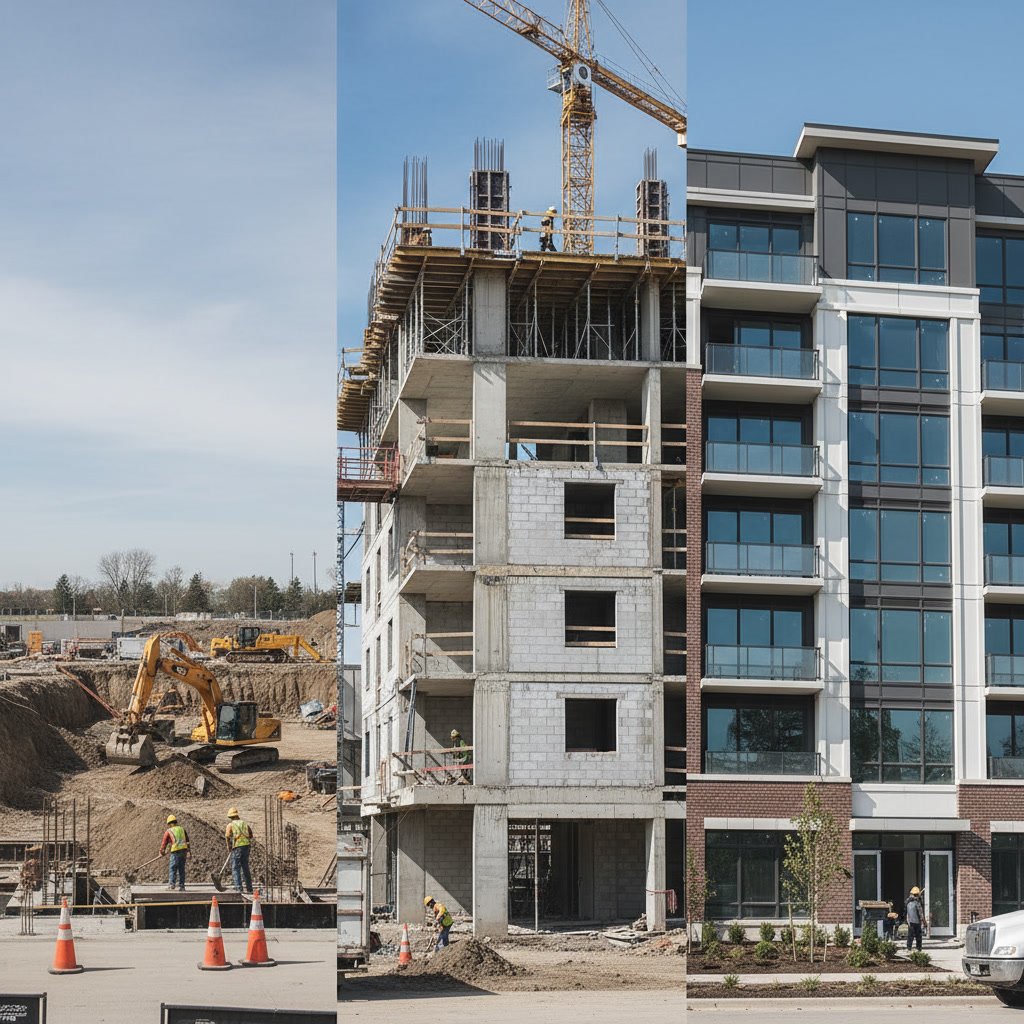



A condo sales gallery tour is your first hands-on experience with a new development before construction completes. During the visit, you will view model units, review floor plans, ask the developer’s sales team about pricing and construction timelines, and decide whether to reserve a unit. This tour is the best opportunity to gather information, evaluate finishes, and understand what you are buying months or years before move-in.
Why Developers Build Sales Galleries Before Construction
Developers need to secure buyer commitments and financing before they break ground or complete construction. A sales gallery serves as both a showroom and a marketing engine. These spaces are designed to help buyers visualize the finished product, even when the building itself is still a blueprint or partially framed structure.
Most sales galleries open 12 to 18 months before delivery. Some galleries include full-scale model units with finished interiors, while others offer virtual reality tours or scaled representations. The goal is to create urgency and help you make a financial commitment based on renderings, materials samples, and the developer’s track record.
What You Will See During the Tour
Expect to spend 60 to 90 minutes in the gallery. The sales team will walk you through a curated experience designed to highlight the development’s best features. You will see model units showcasing finishes, appliances, and layouts. Not every floor plan will have a physical model, so bring the floor plans you downloaded online and ask to see similar layouts in person.
Materials boards display cabinet finishes, countertop options, flooring samples, and fixture styles. You will also review site plans, amenity renderings, and sometimes a scale model of the entire property. Pay close attention to ceiling heights, window sizes, and storage space, as photos and renderings can distort proportions.

How Pricing and Availability Are Presented
Sales teams use pricing sheets that list available units by floor, view, and square footage. Early buyers often receive lower prices and better unit selection. Expect to see pricing tiers that increase as construction progresses or as certain floors sell out.
Ask for a detailed price breakdown that includes the base unit price, upgrade costs, closing costs, and any mandatory fees like capital contributions or working capital deposits. Do not rely on verbal estimates. Request everything in writing before you leave the gallery.
Some developments in markets like Miami or Fort Lauderdale offer early reservation discounts or waive certain fees for the first wave of buyers. Confirm whether these incentives are available and how long they last.
Understanding Reservation Deposits and Purchase Agreements
If you decide to move forward, the sales team will ask for a reservation deposit, typically ranging from $5,000 to $50,000 depending on the unit price. This deposit is usually refundable within a short window, often 10 to 15 days, giving you time to review the purchase agreement with an attorney.
The purchase agreement outlines the total price, deposit schedule, construction timeline, and your rights if the developer delays or fails to deliver. Read every page before signing. Some contracts include mandatory arbitration clauses or limit your ability to exit the deal if circumstances change.
Deposits are typically held in escrow and released to the developer at certain construction milestones. Make sure the escrow terms are clearly defined and that your deposit is protected if the project does not move forward.
Key Questions to Ask About the Developer in Brickell and Beyond
The developer’s reputation is the single most important factor in a pre-construction purchase. Ask how many projects they have completed in Florida, specifically in the region where you are buying. Request references from past buyers and check online reviews.
Ask whether the developer has ever delayed a project, and if so, by how many months. Delays are common in new construction, but a pattern of significant delays or quality issues is a red flag. You should also ask whether the developer is personally guaranteeing the completion or if a third-party completion bond is in place.
If you are considering a development in Brickell or nearby neighborhoods, look for developers with a strong local track record. This is especially important in high-demand areas where construction timelines and permit approvals can vary widely.

Five Critical Questions About Construction and Delivery
Start with the estimated completion date. Ask whether it is guaranteed or subject to change, and what happens if the developer misses the deadline. Most contracts allow extensions for force majeure events, but some developers build in extra time regardless.
Second, ask what happens if the developer runs out of funding. Find out whether the project is fully financed or if sales are required to secure additional construction loans. A well-capitalized developer will have financing in place before opening the sales gallery.
Third, ask about the quality of construction materials and subcontractors. Request the names of the general contractor and major subcontractors, then research their work on other projects.
Fourth, confirm whether the renderings and finishes you see in the gallery are final or subject to change. Some contracts allow developers to substitute materials if certain products become unavailable.
Fifth, ask how the developer handles warranty claims after delivery. Florida law requires a one-year warranty on most construction defects, but the contract may offer additional coverage.
What to Ask About Unit Customization and Upgrades
Most developers offer a selection of finishes and upgrades, but the options vary by project. Ask when you need to finalize your selections and whether you can make changes after signing the purchase agreement. Some developers allow customization up to a certain construction phase, while others lock in finishes at contract signing.
Request a price list for all available upgrades, including flooring, cabinetry, appliances, and lighting fixtures. Compare the developer’s upgrade pricing to the cost of making changes after closing. In some cases, it is more affordable to accept the base finishes and renovate after you take possession.
If you plan to hire your own contractor for post-closing work, ask whether the building allows renovations during the first year and what restrictions apply. Some condo associations limit construction hours or require board approval for certain modifications.
Understanding HOA Fees and Special Assessments
The sales team will provide an estimated monthly HOA fee, but this number is often lower than the actual fee once the building is complete and the association assumes control. Ask for a detailed breakdown of what the fee covers, including reserve contributions, insurance, and amenity maintenance.
Request a copy of the proposed condo documents, including the declaration, bylaws, and budget. These documents outline your rights and obligations as an owner, as well as the association’s financial health. Look for language about special assessments, which can be levied if the reserve fund is insufficient or if major repairs are needed.
Some developers retain control of the HOA board for the first few years, which can delay needed repairs or leave owners with limited input. Ask when control will transfer to the residents and what the process looks like.

How to Compare Multiple Developments Before Deciding
If you are buying a property in a competitive market, you will likely tour multiple sales galleries before making a decision. Create a comparison checklist that includes unit price per square foot, total deposit amount, estimated delivery date, developer reputation, included finishes, and HOA fees.
Take photos of the model units, materials boards, and site plans so you can review them later. Ask for digital copies of all documents, including floor plans, pricing sheets, and the purchase agreement. Do not rely on memory when comparing developments.
Consider visiting the area around each development at different times of day to evaluate traffic, noise, and walkability. A beautiful sales gallery cannot compensate for a poor location or lack of nearby amenities.
What Happens After You Leave the Sales Gallery
Once you leave the gallery, take time to review everything with a real estate attorney who specializes in pre-construction purchases. An attorney can explain contract terms, identify potential risks, and negotiate changes before you commit.
If you decide to move forward, you will sign the purchase agreement and submit the reservation deposit. The developer will countersign the agreement and provide a deposit receipt. From that point, you will follow the deposit schedule outlined in the contract, which typically includes payments at foundation completion, vertical construction milestones, and certificate of occupancy.
Stay in regular contact with the sales team or your real estate agent to receive construction updates. Most developers send periodic emails with photos and progress reports, but you should also visit the site every few months to see the work firsthand.
Making the Sales Gallery Tour Work for You
A condo sales gallery tour is your opportunity to evaluate a development before committing tens or hundreds of thousands of dollars. Bring a list of questions, take detailed notes, and do not let the sales environment pressure you into a hasty decision. The best buyers leave the gallery with a clear understanding of the product, the developer, and the financial commitment required.
If you are ready to explore new developments or need guidance through the pre-construction process, Florida Real State Specialist can connect you with the right opportunities and help you avoid common pitfalls. Whether you are interested in new construction or ready to search property listings across South Florida, professional support makes the difference between a smart investment and a costly mistake.
Reach out to our team at +16464048166 to schedule a consultation and get personalized advice on navigating the South Florida condo market.