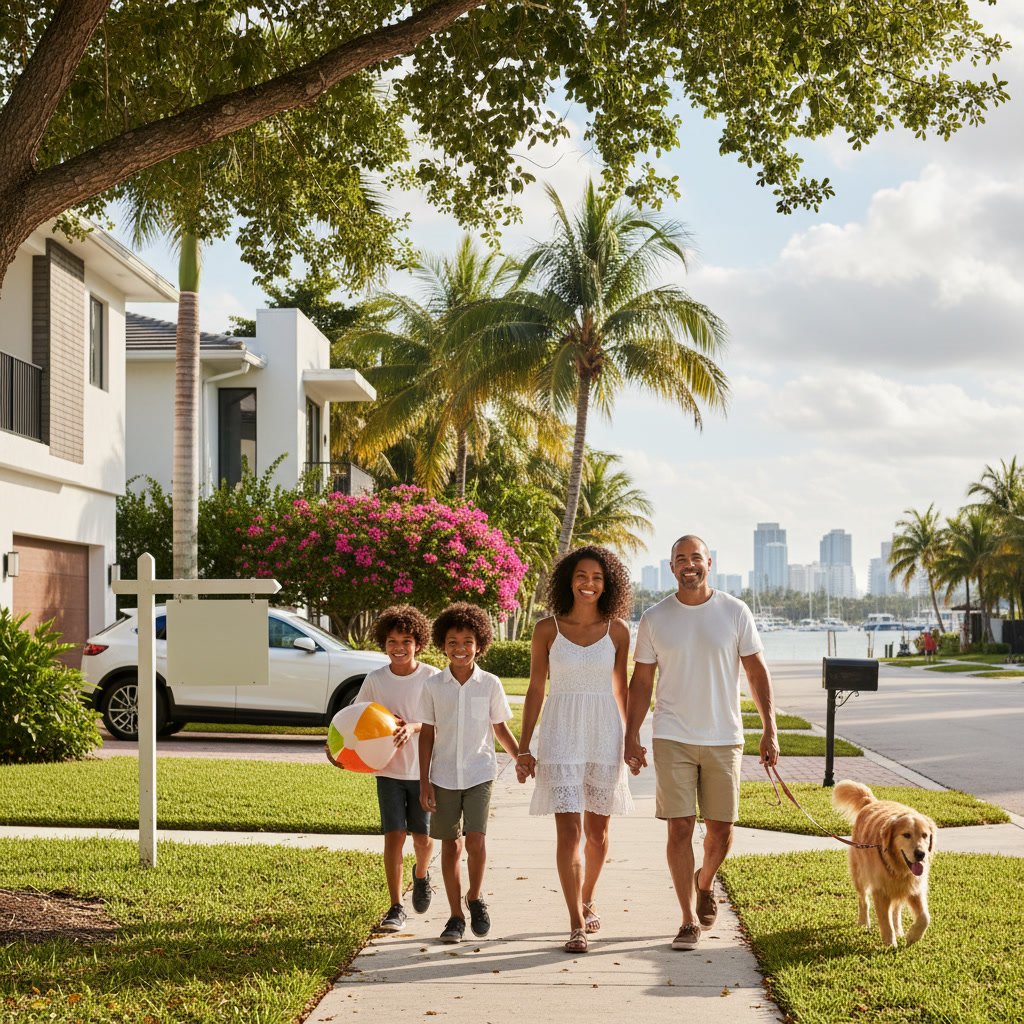



Purchasing your first home in Orlando can feel like an impossible goal when you consider rising property prices and the challenge of saving for a down payment. However, first time buyer Orlando programs exist specifically to bridge that gap and make homeownership accessible to qualified buyers who might otherwise struggle to enter the market. These programs offer down payment assistance, reduced interest rates, tax credits, and more favorable loan terms that can save you thousands of dollars.
This guide walks you through the most valuable programs currently available, what they offer, who qualifies, and how to apply. Whether you earn a moderate income or work in public service, at least one of these programs can help you buy a property in the Orlando area sooner than you thought possible.
Florida Housing Finance Corporation Programs
The Florida Housing Finance Corporation administers several statewide programs that benefit first time buyers in Orlando. These programs consistently rank among the most accessible and generous options available.
The Florida Assist program provides down payment and closing cost assistance up to 3.5% of the home purchase price. This assistance comes as a second mortgage with 0% interest that you repay only when you sell, refinance, or pay off your first mortgage. You can combine Florida Assist with a first mortgage through participating lenders.

The HFA Preferred loan program offers competitive interest rates slightly below market rates. You must purchase a home within designated price limits, which in Orange County currently sit at $420,680 for a single-family home in most areas. These limits adjust annually based on median home values.
Income limits apply based on household size and county. For Orange County, a single person cannot exceed $101,520 in annual income, while a family of four can earn up to $126,900. These thresholds make the program accessible to middle-income earners who struggle with traditional financing.
What Makes These Programs Valuable
Unlike conventional loans requiring 10% to 20% down, Florida Housing programs accept as little as 3% down. When you layer down payment assistance on top of this low requirement, you might need only $2,000 to $5,000 in cash reserves to close on a $300,000 home.
The 0% interest second mortgage for down payment assistance means you never pay a monthly payment on that loan. It simply sits dormant until you eventually sell or refinance, at which point you repay the original amount without any accumulated interest.
Orange County Housing and Community Development Programs
Orange County offers localized assistance programs funded through federal grants. These programs target low to moderate-income households within specific income brackets.
The Down Payment and Closing Cost Assistance program provides up to $30,000 in assistance. This substantial amount can cover your entire down payment and all closing costs on properties valued up to $400,000. The assistance comes as a deferred second mortgage that requires no monthly payment.
To qualify, your household income cannot exceed 80% of the area median income. For a family of four, this threshold currently sits at $72,850. Single buyers face a limit of $51,000.
Properties must be located within Orange County and meet minimum property standards. You must occupy the home as your primary residence for at least five years. If you sell before five years, you repay a prorated portion of the assistance.
Application Process
You must complete a HUD-approved homebuyer education course before applying. Orange County maintains a list of approved counseling agencies that offer these courses both in person and online.
After certification, you submit income documentation, tax returns, and proof of employment. The county reviews applications quarterly, so timing matters. Submit your application early in the quarter to avoid delays.
FHA Loans and Their Orlando Advantages
Federal Housing Administration loans remain the most popular choice for first time buyer Orlando applicants. These loans require just 3.5% down and accept credit scores as low as 580.
FHA loans allow higher debt-to-income ratios than conventional mortgages. You can qualify with up to 50% of your gross monthly income going toward debt payments, including your new mortgage. This flexibility helps buyers who carry student loans or car payments.

The downside involves mortgage insurance premiums. You pay an upfront premium of 1.75% of the loan amount, which lenders typically roll into your loan balance. You also pay annual premiums between 0.45% and 1.05% depending on your loan amount and down payment size.
For a $300,000 FHA loan with 3.5% down, expect to pay roughly $208 per month in mortgage insurance. This cost persists for the life of the loan unless you eventually refinance into a conventional mortgage.
Combining FHA with Down Payment Assistance
Many buyers combine FHA financing with one of the assistance programs mentioned above. The Florida Assist program pairs seamlessly with FHA loans. This combination allows you to purchase with minimal cash out of pocket while maintaining favorable loan terms.
Most FHA lenders in Orlando work regularly with state and county assistance programs. They understand the documentation requirements and can expedite the approval process.
VA Loans for Military Buyers
Veterans, active-duty service members, and qualifying spouses can access VA loans with zero down payment required. VA loans do not charge monthly mortgage insurance, saving you hundreds of dollars each month compared to FHA financing.
Orlando hosts multiple military installations and attracts many veterans. The VA loan program represents the single most powerful financing tool available to this demographic.
You pay a one-time funding fee between 1.4% and 3.6% of the loan amount depending on your military category and whether this is your first VA loan. First-time users with no down payment pay 2.3%. Disabled veterans may qualify for a funding fee waiver.
VA loans accept credit scores as low as 580, though most lenders prefer 620 or higher. The VA does not set maximum debt-to-income ratios, but lenders typically cap total housing expenses at 41% of gross income.
Pro Tip: VA loans allow sellers to pay up to 4% of the purchase price toward your closing costs. Negotiate this concession into your offer to minimize your cash requirement at closing.
USDA Loans for Suburban Orlando Properties
The USDA Rural Development loan program finances homes in designated rural and suburban areas with zero down payment. Several communities around Orlando qualify, including parts of Apopka, Ocoee, and areas east of the city.
These loans target low to moderate-income households. Income limits vary by household size, with a family of four facing a cap of approximately $103,500 in most Orlando-area zones.
Properties must be located within USDA-eligible areas. The USDA maintains an online map showing which addresses qualify. Most areas within Orlando city limits do not qualify, but suburbs and exurbs often do.
USDA loans charge an upfront guarantee fee of 1% and an annual fee of 0.35% of the loan balance. These costs run significantly lower than FHA mortgage insurance, making USDA loans extremely affordable when you qualify.
Specialty Programs for Teachers and Public Service Workers
Florida Housing offers the Hometown Heroes program for eligible frontline workers. This includes law enforcement, firefighters, educators, healthcare workers, childcare employees, and active military personnel.
Hometown Heroes provides $25,000 in down payment and closing cost assistance as a 0% interest, forgivable loan. If you remain in the home for five years, the loan forgives entirely. You never repay a cent.

This program stacks with other first mortgage products, including FHA, VA, conventional, and USDA loans. You can effectively purchase a home with zero money down by combining Hometown Heroes assistance with a VA or USDA loan.
Teachers represent one of the largest beneficiary groups. Given that educator salaries often make saving for a down payment challenging, this program removes the primary barrier to homeownership.
Application requires proof of employment in an eligible field. You submit verification directly through the Florida Housing portal along with standard mortgage documentation.
Tax Credits and Additional Benefits
The Mortgage Credit Certificate program provides a dollar-for-dollar federal tax credit equal to 50% of the mortgage interest you pay each year. If you pay $12,000 in mortgage interest annually, you receive a $6,000 tax credit.
This credit differs from a deduction. Deductions reduce your taxable income, while credits reduce your actual tax liability. The savings can amount to several thousand dollars per year throughout the life of your loan.
You claim the MCC credit every year you hold the mortgage and occupy the home as your primary residence. The credit phases out gradually if your income increases beyond program limits, but most buyers maintain eligibility for many years.
To obtain an MCC, you apply through participating lenders before closing. The certificate costs approximately $300 to $500 and remains valid as long as you keep your original mortgage.
Property Tax Exemptions
Florida offers a homestead exemption that reduces your property’s taxable value by $50,000. The first $25,000 applies to all property taxes, while the second $25,000 applies to non-school taxes.
On a $300,000 home, this exemption saves you approximately $1,100 to $1,400 annually depending on your local millage rates. You must apply for the exemption through the Orange County Property Appraiser’s office by March 1st following your purchase.
First time buyers often overlook this exemption because it requires a separate application beyond your mortgage closing. Make this a priority within your first few months of homeownership.
Preparing Your Application
Successful first time buyer Orlando applicants prepare their finances well before house hunting. Start by reviewing your credit report from all three bureaus. Dispute any errors and pay down high-balance credit cards to improve your score.
Most programs require a minimum credit score of 620, though some accept 580. If your score falls below 620, spend three to six months improving it before applying. Even a 20-point increase can qualify you for better interest rates worth thousands of dollars over the loan term.
Gather documentation early. You need two years of tax returns, two months of bank statements, recent pay stubs, and employment verification. Self-employed buyers need additional documentation including profit and loss statements.
Complete a homebuyer education course. Many programs require this certification, and it genuinely helps you understand the responsibilities of homeownership. Most courses cost between $75 and $150 and take four to eight hours to complete.
Save some cash reserves. While assistance programs dramatically reduce your upfront costs, you still need money for home inspections, appraisals, and moving expenses. Budget at least $3,000 to $5,000 for these items.
Common Mistakes to Avoid
Many buyers rush into homeownership before they understand total monthly costs. Your mortgage payment represents just one expense. Property taxes, homeowners insurance, HOA fees, utilities, and maintenance all add up quickly.
Calculate your total monthly housing cost before making an offer. A $300,000 home with a 6.5% interest rate, property taxes, and insurance might cost $2,600 per month. Make sure this fits comfortably within your budget alongside other obligations.
Avoid making large purchases or opening new credit accounts during the mortgage process. Lenders verify your credit and finances multiple times, including just before closing. A new car loan or furniture purchase can derail your approval.
Do not skip the home inspection. First time buyers sometimes waive inspections to make their offers more competitive. This gamble can cost you tens of thousands of dollars in hidden repairs. Always inspect, even in a competitive market.
If you are considering opportunities beyond Orlando, Florida Real Estate Specialist also serves buyers in Miami, Fort Lauderdale, and West Palm Beach. Each market offers unique first time buyer incentives worth exploring.
Working with the Right Real Estate Professional
Finding a knowledgeable real estate agent who understands first time buyer programs makes a substantial difference. Not all agents stay current on available assistance programs or know how to structure offers that accommodate these financing tools.
Ask potential agents how many first time buyers they have helped in the past year. Request references from recent clients who used down payment assistance or specialty loan programs. An experienced agent guides you toward properties that meet program requirements and helps you avoid costly mistakes.
Your agent should coordinate closely with your lender to ensure all parties understand timeline requirements. Assistance programs often add extra steps to the approval process. Proper coordination prevents delays that could cause you to lose your desired property.
For buyers researching property search strategies, understanding how different neighborhoods affect your financing options matters. Some programs limit purchases to certain geographic areas or property types.
Frequently Asked Questions
Do I qualify as a first time buyer if I owned a home years ago?
Most programs define a first time buyer as someone who has not owned a primary residence in the past three years. If you owned a home five years ago but have rented since, you typically qualify. Some programs also extend eligibility to single parents and displaced homemakers regardless of previous ownership.
Can I use multiple assistance programs at once?
Yes, many buyers stack programs to maximize benefits. You might combine an FHA loan with Florida Assist down payment help and a Mortgage Credit Certificate. However, total assistance usually cannot exceed the amount needed for your down payment and closing costs. Work with your lender to identify the best combination for your situation.
What credit score do I really need for first time buyer Orlando programs?
Minimum scores range from 580 to 640 depending on the program. FHA loans accept 580, but many down payment assistance programs require 620 or higher. Conventional loans typically need 620 minimum. Scores above 680 unlock better interest rates that save you substantially over time. If your score falls below 620, improve it before applying to access more programs and better rates.
How long does the application process take?
Standard mortgage applications take 30 to 45 days from application to closing. Adding down payment assistance or specialty programs can extend this to 45 to 60 days. County-administered programs often review applications quarterly, which can add months to your timeline. Start the process early and maintain realistic expectations about timing.
What happens if I need to sell before the required occupancy period ends?
Most assistance programs require you to occupy the home for three to five years. If you sell earlier, you typically repay a prorated portion of the assistance. For example, if you received $20,000 and must stay five years but sell after three years, you might repay $8,000. Job relocations and other hardships sometimes qualify for exceptions. Review the specific terms of your assistance agreement carefully before accepting funds.
Taking Your Next Step Toward Homeownership
The best first time buyer Orlando programs provide substantial financial assistance that makes homeownership achievable even when saving for a traditional down payment seems impossible. Between state programs, county assistance, federal loan products, and specialty initiatives for public service workers, nearly every qualified buyer can find a path to purchase.
Success requires preparation, patience, and working with professionals who understand these programs thoroughly. Start by reviewing your credit and finances, complete a homebuyer education course, and connect with a lender who specializes in first time buyer financing.
Florida Real Estate Specialist helps buyers navigate the Orlando market and connects them with the resources needed to purchase successfully. Our team understands how these programs work and can guide you toward properties that meet program requirements while fitting your lifestyle needs. Contact us at +16464048166 to discuss your first home purchase and learn which programs offer the best benefits for your specific situation.