

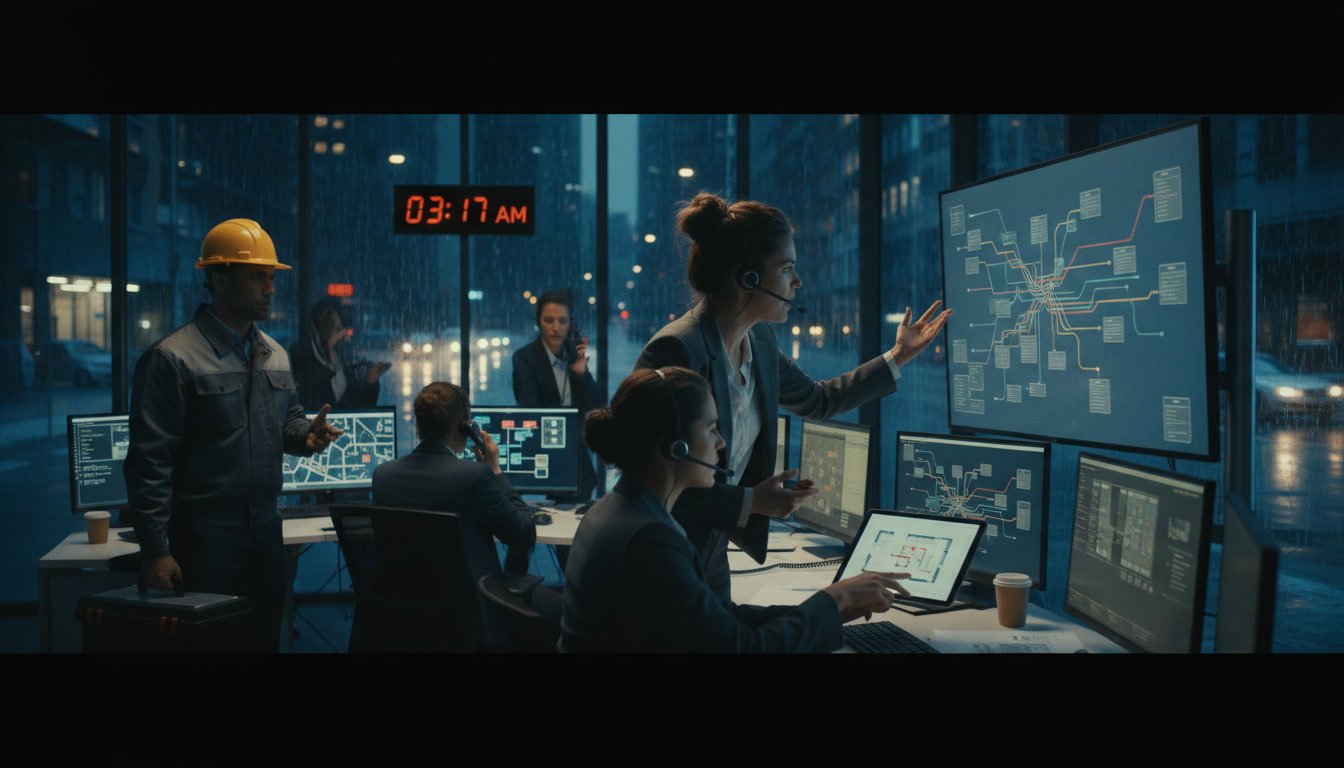
After-hours emergency maintenance coordination involves a 24/7 answering service or call center that receives tenant reports, a tiered response protocol that separates true emergencies from routine requests, a vetted network of licensed contractors on standby, and documentation systems that track every call, dispatch, and repair. Professional property management companies maintain these systems to protect your investment and minimize liability when pipes burst at midnight or air conditioning fails during a Sunday heatwave.
Most property owners underestimate how quickly a minor water leak can cause tens of thousands in damage when left unaddressed for 12 hours. The difference between a managed property and a self-managed rental often becomes clear at 2 a.m. on a holiday weekend.
Why Standard Business Hours Don’t Cover Real Emergencies
Plumbing failures, electrical hazards, security breaches, and HVAC breakdowns follow no schedule. A pipe freezing event in January or a storm-damaged roof in hurricane season won’t wait until Monday morning. Tenants need immediate support, and properties need immediate protection.
Self-managing landlords who rely on personal cell phones quickly discover the cost of interrupted sleep, delayed responses, and the challenge of finding reliable contractors at odd hours. Professional property management solves this by creating dedicated systems that operate independently of any single person’s availability.
The First Point of Contact in After Hours Situations
When a tenant discovers an emergency after 6 p.m. or on weekends, they call a dedicated emergency line. This number routes to one of three systems depending on the management company’s size and structure.
Smaller operators may use an answering service that takes basic information and immediately forwards it to an on-call manager. Mid-size companies often employ a rotating on-call schedule among staff members. Larger firms in markets like Miami and Fort Lauderdale maintain true 24/7 call centers with trained staff who can assess situations in real time.
The intake process captures the tenant’s name, property address, contact number, and a detailed description of the problem. Well-trained operators ask specific questions to determine severity and guide tenants through immediate safety steps when needed.
How Emergencies Get Prioritized and Classified
Not every after-hours call qualifies as a true emergency. Professional management teams use a classification system that typically includes three or four tiers.
Tier one emergencies include active water leaks, gas odors, electrical sparking, no heat in winter below 55 degrees, no cooling in summer above 85 degrees, lockouts with children or vulnerable adults inside, security breaches with broken doors or windows, and sewage backups. These receive immediate dispatch, often within 30 to 60 minutes.
Tier two urgent issues might include a non-functioning refrigerator, a single clogged toilet in a multi-bathroom unit, or a malfunctioning garage door. These get scheduled for next-business-day service or weekend appointments depending on circumstances.
Tier three routine requests cover items like a dripping faucet, a burned-out light bulb in common areas, or cosmetic damage. These enter the normal work order queue for handling during business hours.
The Vendor Network That Makes Rapid Response Possible in Brickell
Emergency response depends entirely on having licensed, insured contractors who answer calls at midnight and arrive with proper tools. Building this network takes years of vetting, relationship management, and volume that gives contractors incentive to prioritize your calls.
Professional property managers maintain contracts with plumbers, electricians, HVAC technicians, locksmiths, glass repair specialists, and restoration companies. These vendors undergo background checks, license verification, insurance confirmation, and performance reviews.
In dense urban markets, response times of 60 to 90 minutes are standard for true emergencies. Properties in areas like Coconut Grove or waterfront locations benefit from proximity to multiple vendors who can reach the site quickly.
Pricing structures for after-hours work typically include overtime rates that run 1.5 to 2 times normal charges. Premium emergency fees may apply for holiday dispatches. Established management companies negotiate volume discounts that offset some of these premiums, savings that individual landlords rarely access.
What Happens Between the Call and the Contractor Arrival
Once the emergency gets classified and approved for dispatch, the coordination process moves quickly. The on-call manager or call center contacts the appropriate vendor from the approved list, provides property access information, and relays the specific problem details.
Simultaneously, the system notifies the property owner through email, text, or app notification depending on their preferences. This communication includes the nature of the emergency, the vendor dispatched, estimated arrival time, and authorization details.
For properties with smart locks or lockbox systems, vendors receive temporary access codes. For traditional key access, managers may need to meet contractors on-site or arrange for building management to provide entry in multi-unit properties.
The tenant receives confirmation that help is on the way, including the vendor’s name, estimated arrival window, and any safety instructions to follow while waiting. This communication prevents repeated calls and reduces tenant anxiety.
Documentation and Authorization Protocols That Protect Everyone
Every emergency creates a paper trail that protects owners, managers, and tenants. Call logs record the initial report timestamp, caller identity, problem description, and classification decision. This documentation proves critical if disputes arise about response times or necessity.
Authorization limits define spending thresholds that managers can approve without owner contact. Common structures allow $500 to $1,000 in immediate repairs for clear emergencies, with owner approval required for larger scopes. Life safety issues typically receive blanket authorization regardless of cost.
Contractors document their findings with photos, written reports, and itemized invoices. These records feed into property maintenance histories and help identify recurring problems that signal larger issues needing attention.
The Technology Infrastructure Behind Modern Emergency Response
Sophisticated property management firms use integrated software platforms that connect call intake, vendor dispatch, owner notification, and accounting in a single system. When a call comes in, the operator enters details that automatically trigger notifications and create work orders.
Mobile apps allow managers to review situations, approve spending, and communicate with vendors from anywhere. GPS tracking shows vendor location and estimated arrival. Photo uploads from contractors provide real-time assessment without requiring manager site visits.
Automated escalation ensures that if the primary on-call manager doesn’t respond within a set timeframe, the system alerts backup personnel. This redundancy prevents emergencies from falling through cracks during vacations or personal emergencies affecting staff.
Smart home integration at some properties allows managers to remotely verify conditions. Water sensors detect leaks, thermostats confirm temperature readings, and cameras show actual conditions rather than relying solely on tenant descriptions.
Cost Implications and How They Compare to Self-Management
After-hours emergency services add meaningful costs to property management. Call center operations, on-call staff compensation, vendor premium rates, and technology infrastructure all carry price tags that smaller portfolios struggle to justify independently.
These costs typically get absorbed into overall management fees rather than itemized separately. Standard management fees in South Florida range from 8% to 12% of collected rent for single-family homes and 5% to 10% for larger multi-family properties, with 24/7 emergency coverage included.
Self-managing owners who handle their own emergencies save the management fee but face hidden costs including their own time valued at zero, higher contractor rates without volume discounts, potential for delayed response causing additional damage, and liability exposure from improper handling. The true cost comparison shows much smaller gaps than the management fee suggests.
Owners managing multiple properties or those selling investment properties should review their actual emergency response costs over 12 months. Many discover they’ve spent more than professional management would have cost while delivering slower, less consistent service.
Common After Hours Scenarios and How They Get Handled
A water heater failure at 9 p.m. on Saturday generates a call to the emergency line. The operator determines the unit is leaking but not flooding, classifies it as tier one due to active water, and dispatches a plumber within 90 minutes. The plumber shuts off water supply, assesses the tank as non-repairable, and provides a replacement quote. The manager approves the work under standing authorization limits, and the new heater gets installed Sunday morning.
An air conditioning failure during a July heatwave at 11 p.m. triggers emergency dispatch when the indoor temperature reaches 86 degrees with an infant in the unit. The HVAC technician arrives within an hour, discovers a failed capacitor, completes the repair on-site, and restores cooling by 1 a.m. Total cost including emergency fees runs $385 compared to a daytime repair cost of $220, but prevents a displaced tenant and potential health crisis.
A tenant lockout at 7 p.m. on a weekday gets classified as tier two because alternative entry through a patio door exists. The manager coaches the tenant through that entry remotely, avoiding a $150 emergency locksmith call entirely. This decision-making separates quality management from services that dispatch for every call to maximize contractor commissions.
Why This System Matters More in Multi-Family Properties
Single-family rental emergencies affect one household. Multi-family building emergencies can impact dozens of units simultaneously. A main water line break, electrical panel failure, or elevator breakdown in a 20-unit building creates exponentially more urgent situations.
Common area emergencies like lobby security door malfunctions, parking gate failures, or pool equipment problems require rapid response to maintain safety and property value even when individual units aren’t directly affected. Understanding property management costs in these scenarios helps owners budget appropriately.
Building code compliance adds another layer. Many jurisdictions require certain building systems to maintain function at all times, making after-hours repairs legal obligations rather than service choices. Professional management ensures compliance while protecting owners from code violation penalties.
Protecting Your Investment Around the Clock
The difference between a well-maintained investment property and one that hemorrhages value often comes down to emergency response quality. Water damage from a delayed leak repair can easily exceed $10,000. Tenant turnover from poor emergency service costs thousands in vacancy and turnover expenses. Liability claims from injuries due to unaddressed hazards can reach six figures.
Professional emergency maintenance coordination protects property value, tenant satisfaction, and owner peace of mind simultaneously. The systems, vendor networks, and protocols that enable true 24/7 coverage represent infrastructure that individual owners cannot replicate cost-effectively.
Florida Real State Specialist maintains comprehensive after-hours emergency coordination for properties throughout South Florida’s most competitive rental markets. Our established vendor networks, proven protocols, and experienced team ensure your property receives professional protection regardless of when problems occur. Whether you own a single condo or a multi-family building, our systems scale to provide consistent, reliable emergency response that protects your investment and keeps quality tenants satisfied. Contact our team at (646) 404-8166 to learn how professional property management eliminates the stress and risk of handling emergencies yourself.